 Solutions
  Tops
Tops  Bottoms
  Suits
Suits  Accessories


Table of Contents
GSM is a basic measurement used in the fabric and clothing industry. Many new designers want to understand this term because it affects material choice and product quality. When you develop T-shirts, hoodies, shirts, or jackets, understanding GSM helps you choose the right fabric weight and avoid production mistakes.
In this blog, we’ll break down everything you need to know about GSM—what GSM means in fabric, how it affects clothing, how to choose the right GSM for your product category, and why GSM matters when working with clothing manufacturers like AKCN.
What Is GSM in Fabric?
GSM means Grams per Square Meter. Sample GSM numbers are measured using specialized GSM gauges, also known as textile fabric weight meters. This number tells you the weight of one square meter of fabric. A fabric with a low GSM has less material per area and therefore feels light. A fabric with a high GSM has more material per area and feels heavy.
In simple terms:
- A low-GSM fabric is usually thin and soft.
- A high-GSM fabric is usually thick and firm.
Because GSM is a standardized measurement, it’s used globally as a consistent way to compare fabric weight regardless of the textile type.


What Is GSM Material?
The phrase “GSM material” refers to fabric that is described using its GSM number. The GSM value gives a specific and measurable description of fabric weight, which is more accurate than general words such as “thin” or “thick.”
For example:
- 160 GSM jersey is a lightweight fabric suitable for summer T-shirts.
- 300-380 GSM fleece is a medium-heavy fabric used for hoodies.
- 450 GSM cotton fleece is a heavyweight fabric used for jackets or knitwear.
Different GSM levels match different clothing purposes and performance needs.
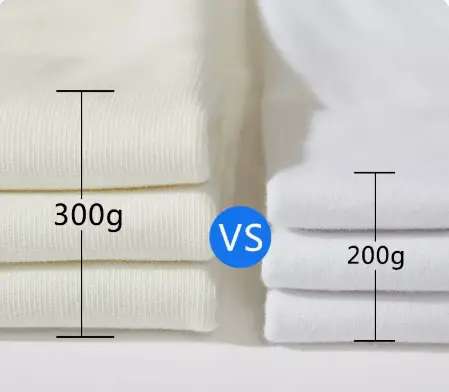
Why GSM Matters in Fabric Selection
GSM affects several important aspects of a garment. Each point below represents a direct and measurable effect of fabric weight.
1. Fabric Strength
A higher GSM fabric contains more fibers per area, which makes the fabric stronger and more durable.
2. Warmth and Insulation
A higher GSM fabric holds more air within its structure, which increases warmth. This is why hoodies, sweaters, and jackets often use 280–450 GSM fabrics.
3. Transparency
A low GSM fabric, like 120–140 GSM, has fewer fibers per area, so light passes through easily. This makes the fabric more transparent, especially in lighter colors.
4. Shape and Drape
A stiff, structured look usually requires a higher GSM material. A flowy or soft drape comes from lower GSM fabrics.
5. Production Cost
A high GSM fabric uses more fiber and therefore costs more to produce. The GSM number directly influences fabric price.

GSM for Clothing: Recommended GSM by Product Type
Designers use GSM ranges to match fabric weight to clothing function. Below is a quick guide clothing manufacturers use to select fabric weight.
T-shirts (120–260 GSM)
- 120–160 GSM→ Summer tees, promotional tees, fast-fashion basics
- 180–220 GSM→ Everyday premium tees, streetwear staples
- 240–260 GSM→ Heavyweight structured tees, oversized streetwear
Hoodies and Sweatshirts (260–450 GSM)
- 260–320 GSM→ Lightweight hoodies
- 330–380 GSM→ Standard streetwear hoodies
- 400–450 GSM→ Luxury heavyweight fleece, Heavyweight and oversized hoodies
Polo Shirts (180–260 GSM)
Higher GSM increases structure, helping the collar and placket stay neat.
Joggers & Sweatpants (280–400 GSM)
Heavy fleece improves warmth and silhouette.
Shirts (100–180 GSM)
Poplin, Oxford, twill, and flannel fabrics range widely depending on season.
Jackets (300–600 GSM+)
Outer shell fabrics may have lower GSM, but padding or fleece increases total weight.

How to Choose the Right GSM for Your Clothing Line
Designers can use the factors below to make clear and practical GSM choices.
1. Local Climate and Season
Hot-weather markets prefer 140–180 GSM. Cold-weather markets need 300+ GSM.
2. Desired Style and Fit
Oversized streetwear often uses 240–260 GSM fabrics to maintain structure and volume.
3. Branding and Price Point
Higher GSM feels more premium—and customers associate weight with quality.
4. Fabric Type
Two fabrics with the same GSM can feel different because fiber type, yarn twist, and knitting method also influence texture and thickness.
5. Decoration Method
Some decoration methods require specific GSM ranges:
- Screen printing works best on medium GSM fabrics with a smooth surface.
- Embroidery requires higher GSM fabrics to prevent fabric distortion.
How GSM Is Measured in Fabric Manufacturing
Factories measure GSM using a fabric cutter and scale. A small circular sample is weighed, then scaled up to grams per square meter.
This ensures consistency batch-to-batch.
Common GSM Misconceptions
“Higher GSM = Better Quality”
Not necessarily. A heavy fabric can still be low-quality if the yarn is cheap.
“GSM tells you thickness”
GSM measures weight, not true thickness. Dense yarns can make thin fabrics feel heavy.
“GSM is the only metric that matters”
Other factors matter too: fiber quality, knitting gauge, yarn twist, and finishing.
GSM in Streetwear
Streetwear brands often opt for medium- to high-gsm fabrics because these fabrics offer a better structure, weight, and overall feel. Brands that focus on oversized T-shirts usually use 240–260 GSM, while hoodies commonly use 360–420 GSM fleece for a premium look.
How AKCN Helps with GSM Selection
AKCN assists brands in choosing the right GSM based on product type, season, printing needs, and target market. The team sources fabrics, creates samples, and manages bulk production. AKCN also supports low MOQ starting from 50 pieces, which helps new brands launch collections with less risk.
Conclusion: Why Understanding GSM Matters
GSM is more than a number—it determines how a garment feels, performs, drapes, and even how customers perceive it. By choosing the right GSM, your clothing line becomes more consistent, more comfortable, and more premium.
If you’re unsure which GSM is best for your collection, AKCN can guide you through fabric selection, sampling, and production.
Start your custom clothing project today with flexible MOQs and professional development support. Show your idea, choose your fabric, and we’ll handle the rest.


 Low MOQ
  Quick Delivery
  Discount for you
  Worldwide Shipping
  6,000+ Satisfied Customers