 Solutions
 Tops
 Bottoms
 Suits
 Accessories


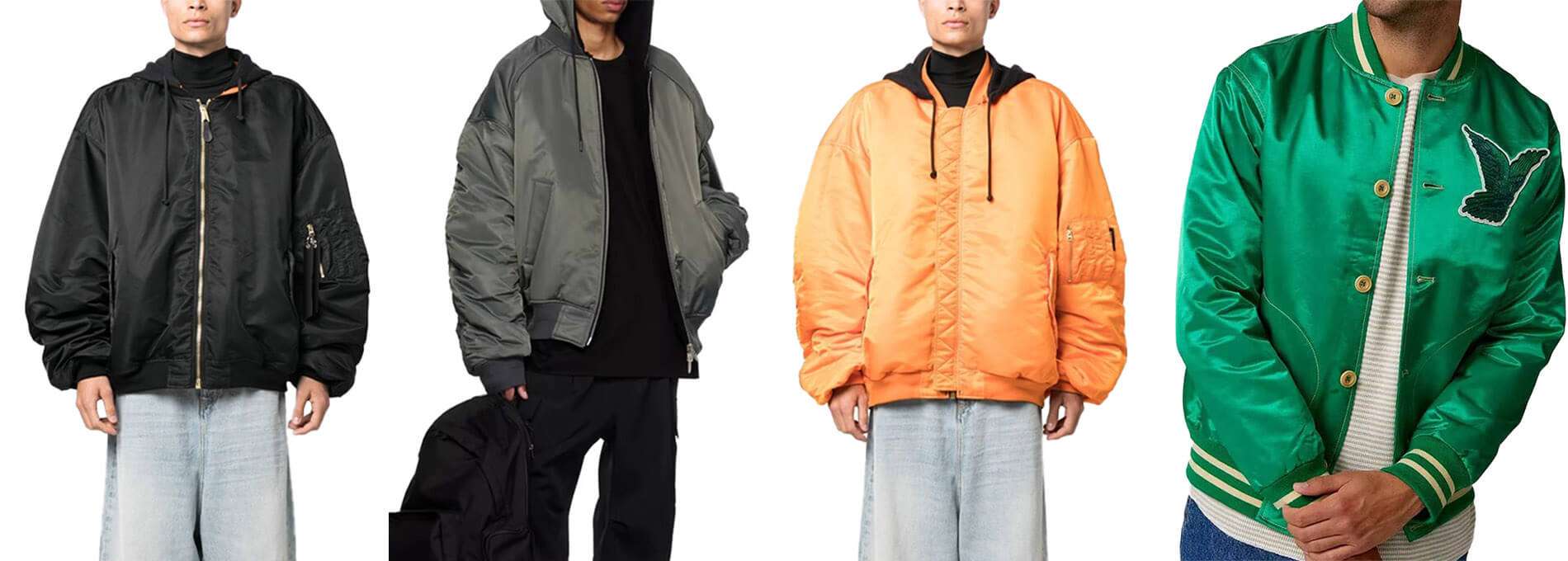
A streetwear bomber jacket succeeds when five parts agree: the pattern, shell, lining or fill, rib trim and front zipper. Change one and the others may need to move. The jacket should therefore be developed as a complete system, not as a generic zip shell decorated after construction.
Key Takeaways
- Fit is a relationship, not a label. Chest volume, body length, shoulder, sleeve and finished hem opening create the bomber silhouette together.
- The material stack controls more than warmth. Shell, lining and optional insulation alter drape, bulk, movement, care and decoration choices.
- Rib and zipper are structural parts. Their finished dimensions determine gathering, front balance, cuff behavior and where the jacket lands.
- Approval happens on the complete sample. Test fit, pockets, hardware, decoration and the intended care route before bulk production.
This guide is for brands preparing a bomber for sampling, costing or production. It does not replace a specification with a list of fashionable options. For broader outerwear development, see our custom jacket manufacturing page. If the bomber belongs to a multi-product drop, the custom streetwear manufacturer page explains how jackets, tops and bottoms can be developed within one collection.
What Makes a Bomber Jacket a Bomber in Manufacturing Terms?
A bomber jacket is defined by the relationship between a relatively short body, a front closure, shaped sleeves and a controlled lower opening. Rib may form the collar, cuffs and hem, but the recognizable blouson effect comes from placing more shell volume above a smaller finished hem—not from one fabric or one military detail.
Pattern
Sets length, chest volume, shoulder and sleeve shape.
Shell
Creates the visible surface, drape and first performance layer.
Interior
Lining and optional fill control movement, finish, warmth and bulk.
Rib
Closes the openings and distributes gathering.
Zipper
Fixes the center-front length and left-to-right balance.
That system separates a bomber from nearby jacket categories. A varsity jacket often uses a snap front, contrasting sleeves and collegiate construction language. A coach jacket usually has a straighter body and shirt-style collar. A puffer depends heavily on baffles and insulation loft. Modern designs can borrow details across categories, but a production brief should name the intended construction instead of treating the terms as interchangeable.
MA-1-inspired sleeve pockets, orange linings and flight-satin surfaces are design references, not requirements. A cropped wool bomber or matte technical bomber can retain the same underlying silhouette without reproducing a military specification. This boundary is useful: it lets the brand define what the product must do rather than asking a factory to guess what “authentic bomber” means.

Streetwear Satin Bomber Jacket
Which Bomber Jacket Fit Works for a Streetwear Collection?
Define a bomber through measurable relationships—chest volume, body length, shoulder position, sleeve volume and finished hem opening. “Oversized,” “cropped” and “classic” are useful directions, but none tells a pattern maker where the jacket should land or how much shell should gather above the rib.
| Fit direction | Body relationship | Shoulder and sleeve | Hem behavior | Main sample risk |
|---|---|---|---|---|
| Classic blouson | Moderate volume with a relatively short body | Balanced shoulder; sleeve shaped toward cuff | Controlled gathering above rib | The body looks flat if shell ease and hem rib do not agree |
| Oversized streetwear | More chest and sleeve volume without equal length everywhere | Extended or dropped shoulder; deliberately fuller sleeve | Hem still needs to contain the extra volume | The jacket becomes merely long or sleeve-heavy |
| Cropped and boxy | Width emphasized against restrained length | Broad shoulder may remain; sleeve balance becomes critical | Landing point is visually prominent | The front rides up, lining shows or rib sits above the intended level |
| Elongated and relaxed | More length with a softer blouson effect | Depends on the layering brief | Often requires less aggressive gathering | The product loses its bomber balance and reads as a generic zip jacket |


These are design relationships, not universal centimeter values. The core chart should identify half chest, shoulder, body length from a named point, armhole depth, bicep, sleeve length, cuff opening, rib heights and finished hem circumference. Sleeve length is especially easy to misread on a dropped shoulder; state where the measurement starts.
Review the sample zipped and open, from front, side and back. Use the layer the customer is expected to wear underneath. A bomber intended over a hoodie needs a different armhole and interior allowance from one designed over a T-shirt. Ask the fit model to raise and rotate the arms: the jacket may look balanced at rest while the lining, armhole or rib restricts movement.
Do not approve the front and back in isolation.
A shorter front, heavy back embroidery or a lining with insufficient ease can pull the jacket away from level. The side view often exposes a problem that a centered front photograph hides.
How Do Shell, Lining and Insulation Change the Jacket?
Choose the material stack from the intended surface, structure, season, movement and care route. The shell supplies the visible hand and drape; the lining affects interior movement and finish; optional interlining or padding adds warmth and bulk. Each layer changes how the pattern, rib, seams and decoration behave.
| Shell direction | Visual and structural character | What the sample must answer | Decoration question |
|---|---|---|---|
| Nylon or polyester flight-satin direction | Smooth surface, sheen and classic flight-jacket character | Exact fiber, weave, finish, density, snagging, static, care and color | Will print, transfer or embroidery remain clean on this exact shell? |
| Matte synthetic twill, Taslan or technical woven | Less shine; utility or technical appearance | Hand, coating, abrasion direction, noise, drape and needle marks | Can the coating and surface tolerate the selected heat, ink or needle process? |
| Cotton or cotton-blend twill | Drier surface with a workwear influence | Shrinkage, colorfastness, crease behavior, weight and care route | Does washing or decoration change shade and dimensions? |
| Wool or wool blend | Heavier, tailored or varsity-adjacent character | Fiber disclosure, weight, pressing, pilling, care and rib balance | Does dense decoration add too much local weight or stiffness? |
| Leather or leather-look material | Structured premium or heritage direction | Material identity, thickness, panel shade, needle marks and care | Can placement be executed without irreversible marks or distortion? |


Satin is not a complete fiber specification
“Satin bomber” describes a surface or weave direction, not one fiber. A satin-faced shell may be made from nylon, polyester, silk or another material, and those versions will not share the same cost, care, heat response or printing behavior. Record fiber content, construction, finish, weight and approved hand rather than placing “satin” alone in the bill of materials.
Plain lining, quilted lining or no full lining?
A smooth plain lining helps the jacket move over an under-layer and gives a clean interior. Quilting can secure insulation and introduce visual structure, but quilt spacing, fill and seam bulk all affect the pattern. An unlined or partially lined bomber reduces layers yet exposes seam finishing and pocket bags. None is automatically superior; the choice follows season, silhouette, cost and intended care.
Lining ease must be controlled. Too little can pull the shell, shorten movement or drag the hem upward. Too much, or poor anchoring, can let the lining hang below the rib or twist inside the sleeve. Inspect the jacket from the inside while it is zipped, then turn the sleeves and hem enough to see how the layers are secured.
Water-repellent is not the same as waterproof
If the brand wants a water-repellent shell, name the finish and agree on a test. AATCC TM22 measures resistance of a fabric surface to wetting through a controlled spray pattern. AATCC also states that this spray method is not intended to predict probable rain penetration because it does not measure water passing through the fabric. Seams, zipper construction and garment design remain separate questions.


How Should Rib Collar, Cuffs and Hem Be Specified?
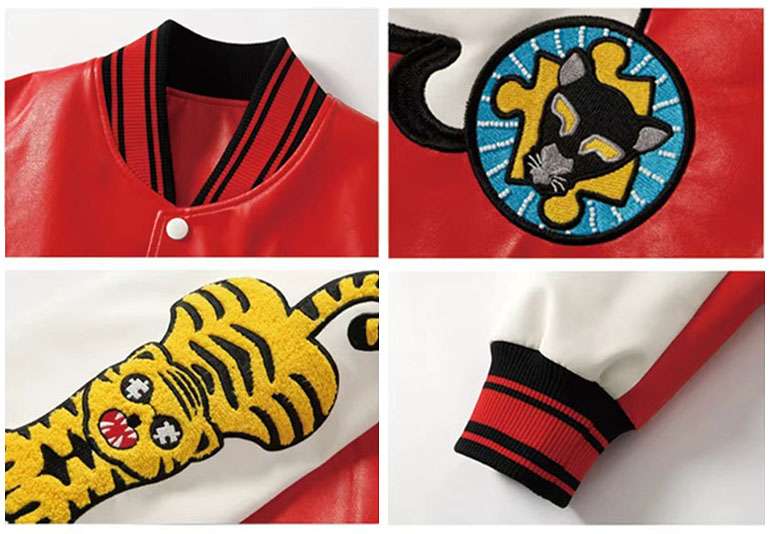
Bomber rib is structural, not decorative trim. Its knit construction, fiber content, stretch, recovery, finished dimensions, stripe layout and attachment tension affect collar shape, sleeve length and the volume gathered above the hem. Approve the rib with the shell pattern rather than from a color swatch alone.
Collar
Check whether it should stand or fold, how the two sides meet at center front, and whether the neckline remains symmetrical when zipped.
Cuffs
Hem
Check finished circumference, gathering distribution, landing point, ride-up and alignment with both zipper ends.
Striped rib
Specify sequence, stripe width, visible height and matching rules at seams; “two stripes” is not a production standard.
The shell opening and rib opening cannot be chosen independently. Their relationship controls gathering and stress at the join. A tight-looking rib may recover poorly; a dense rib may still feel wrong against a light shell. Conversely, a soft rib can flatten an otherwise strong silhouette. Record the approved physical rib standard, not just a photograph.
There is no universal rib ratio or recovery percentage for all bomber jackets. The correct value depends on the knit, fiber, finished height, shell ease and intended fit. The sample should show a smooth attachment without uncontrolled puckering while still creating the planned blouson shape.
How Should Zippers, Pockets and Hardware Be Chosen?
Select hardware for the jacket’s weight, function, care route and visual direction. A supplier name alone is not a specification. The tech pack should define zipper construction, size, tape, element finish, slider, puller, opening direction and length, then coordinate those choices with the shell, facing, lining and rib.

Embroidery

Screen Printing

Rhinestone Application
Embroidery, patches and appliqué
Direct stitching adds thread and local stiffness; patches and appliqué add another material layer. For custom embroidery, patches and appliqué, review artwork scale, stitch direction and density, backing, shell stability and lining access. Large back work must be assessed on-body because the shell gathers at the hem and moves across the shoulder blades.
A decoration placed from the flat center back can look lower once the jacket blouses over the rib. Chest art may collide with a pocket welt, while sleeve art can rotate out of view. Name placement from stable pattern or seam references, and photograph the approved worn position.
Screen printing and heat-transfer routes
Do not transfer a T-shirt print recipe directly to outerwear. Coatings, fiber, surface texture and heat sensitivity can change adhesion, cure and appearance. Test the chosen screen printing or heat-transfer option on the approved shell. When panels are decorated before assembly, define how the factory protects them through sewing and pressing.
Rhinestones and mixed techniques
Rhinestones, embroidery and print can share one jacket, but the order matters. Heat, pressure, backing and access to the reverse side may conflict. Approve a sequence that covers decoration, panel assembly and lining closure, then inspect whether rework remains possible. A digital mockup cannot answer those production questions.
How Should a Bomber Jacket Sample Be Checked?
Approve the bomber as a complete system, zipped and open, over the intended base layer and after the agreed care or performance procedure. Swatches and trim cards cannot reveal lining drag, rib recovery, pocket usability, zipper balance or whether the blouson shape stays level in wear.
Freeze the material standards
Identify the approved shell, lining, fill or interlining, rib, zipper, hardware, labels and decoration. Mark the sample version so later approvals cannot be confused.
Measure by named methods
Use defined points for chest, shoulder, length, sleeve, bicep, openings and rib. Record tolerances by point rather than assuming one number suits every measurement.
Check the zipped front
Compare left and right fronts, zipper operation, hem-rib meeting, collar ends, facing and lining. The center front should not pull the jacket off level.
Test fit and movement
Review front, side and back over the intended layer. Raise, reach and rotate the arms; watch the armhole, sleeve lining, cuff and hem.
Use every pocket and closure
Insert the expected object, operate zippers and snaps, and inspect reinforcement. Note whether loaded pockets distort the silhouette.
Inspect decoration inside and out
Confirm dimensions, worn placement, puckering, backing and how the lining covers or accommodates the work.
Apply the agreed care or performance test
Recheck dimensions, shade, rib, zipper, lining, seams and decoration. Record the method and result instead of writing “wash tested” without conditions.
For products sold in the United States, the FTC Care Labeling Rule requires manufacturers and importers to have a reasonable basis for the care instructions they provide. That matters on a bomber because the shell, rib, lining, fill, hardware and decoration may respond differently to cleaning. A label copied from a similar-looking jacket is not evidence for the complete product.
What Should a Brand Send Before Sampling?
A workable bomber brief identifies the silhouette, every material layer, rib specification, hardware, pockets, artwork, branding, quantity, size range and target date. Reference images communicate direction, but a sample can only become repeatable when the important choices are measurable and purchasable.
- Fit: classic, oversized, cropped, boxy or another defined relationship, plus the intended under-layer.
- Measurements: chart and method for body, sleeve, openings and finished rib dimensions.
- Shell: fiber, weave or construction, finish, color, weight/hand and any performance claim.
- Interior: lining, fill or interlining, quilting direction and internal finishing.
- Rib: construction, fiber, color or stripe sequence, finished heights and openings.
- Hardware: zipper, snaps, pullers and finish, including custom artwork where needed.
- Pockets: type, opening, placement, bag and expected use.
- Decoration: production files, technique, dimensions, placement and color references.
- Order plan: quantity by color, size range, labels, packaging, destination and target date.
If the project is starting from references, state which features matter and which may change. The factory should not have to infer whether a photo is being used for length, sleeve volume, shell sheen or pocket placement. A cut sheet and specification sheet serve different purposes; use the specification to record the measurable product decisions that must survive from sample to bulk.
What Is the MOQ for a Custom Streetwear Bomber Jacket?
AKCN’s standard custom garment projects start from 50 pieces. Projects requiring complex custom-developed fabric normally start from 300 pieces. The final minimum depends on the shell, lining, rib, colors, zipper and hardware, decoration and whether any material must be developed specifically for the order.
From 50 pieces
Standard garment customization using an approved available fabric and a feasible construction/decoration plan.
Normally from 300 pieces
Complex custom fabric development where the material itself must be specially produced for the project.
A 50-piece starting point does not mean unlimited combinations. One bomber in one shell and color is a different sourcing plan from several shell colors, custom-striped rib, multiple zipper finishes and separate artwork placements. Send the full style/color breakdown before treating a minimum as confirmed.
Frequently Asked Questions
There is no single best fabric. Nylon or polyester can support a flight-jacket direction, cotton twill a drier workwear feel, wool blends a heavier tailored character, and leather or PU leather materials a structured result. Choose from the intended surface, structure, season, decoration, care and budget, then approve the actual shell.
Satin describes a weave or surface structure, not one fiber. A satin-faced bomber shell may be nylon, polyester, silk or another material. The specification should state both the fiber content and fabric construction or finish.
A bomber typically relies on a zip front and a blouson relationship between body volume and a controlled hem. Varsity jackets often use snap fronts, contrasting sleeves and collegiate details. Modern streetwear can combine features, so the tech pack should define the actual construction.
It should add deliberate chest, shoulder and sleeve volume without automatically increasing every dimension equally. Body length, cuff position and finished hem opening must still control the shape. Approve it zipped and open over the intended under-layer.
Use a plain lining for a smooth interior, quilted lining when fill must be secured and added structure or warmth is intended, or an unlined route when the exposed construction has been designed accordingly. The choice depends on season, silhouette, care and cost.
Often yes, but “nylon” alone is not enough to approve the process. Test the exact shell, finish or coating, artwork, backing, ink or adhesive, heat and placement. Inspect distortion, adhesion, color and the interior finish on a production-representative sample.
Coordinate the zipper tape with the shell, facing, seam handling and pressing, then check the zipped sample before bulk. A suitable component can still look wavy if the layers feed differently or the center-front lengths and sewing tension are not controlled.
Standard customization starts from 50 pieces. Projects requiring complex custom-developed fabric normally start from 300 pieces. Exact MOQ depends on materials, colorways, rib, hardware, construction and decoration.
Build the Bomber Specification Before Bulk Production
Send the target fit, quantity, size range, shell and lining direction, rib details, zipper and hardware, pockets, artwork, destination and deadline. With those decisions visible, the factory can confirm the sample route and project-specific MOQ instead of costing from the word “bomber” alone.
Table of Contents
Get a Quote
Work with our AKCN clothing producer today!


 Low MOQ
 Quick Delivery
 Discount for you
 Worldwide Shipping
 6,000+ Satisfied Customers